Full spoilers for Susanna Clarke’s Piranesi, including the final scene.
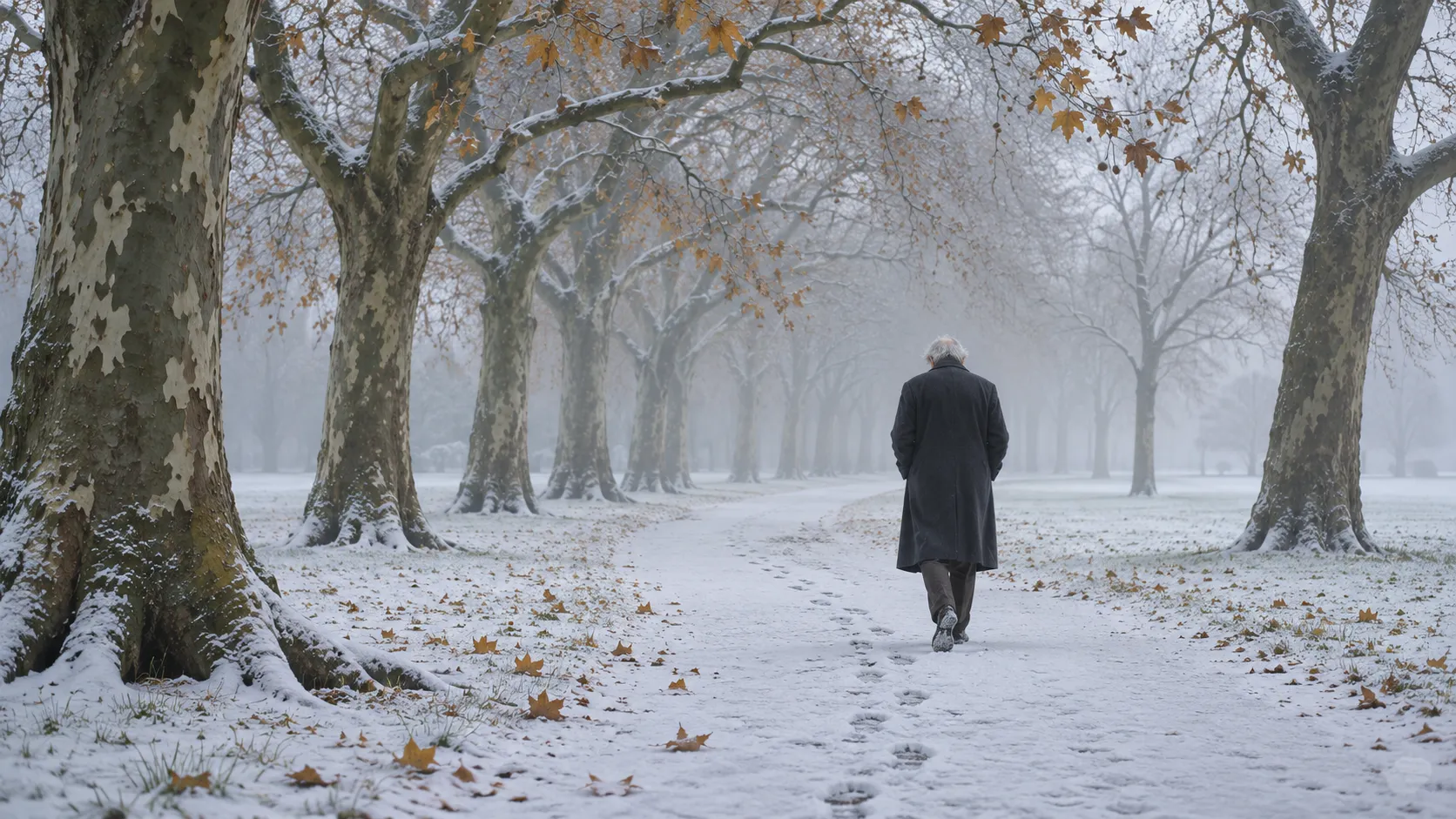
At the end of Piranesi, the narrator discovers that he entered the House as Matthew Rose Sorensen, a journalist researching Laurence Arne-Sayles. He leaves with the detective Sarah Raphael and is reunited with his family. Yet when he tells us about his life afterward, he speaks of Matthew and Piranesi almost as two people he once knew. The clearest glimpse of who he has become comes in a snowy London park. Passing a tired old man, he recognizes a king he knew in the House.
What happens at the end of Piranesi?
The first person to tell the narrator how he came to the House is, in a sense, himself. Among the scraps of his earlier journals are pages he can fit back together. They preserve the testimony of Matthew Rose Sorensen, who went to interview Valentine Ketterley about the work of Laurence Arne-Sayles. Ketterley lured him into the House and left him there. The man the narrator has trusted as the Other already knows the answer to the question the journals have forced him to ask.
The discovery also changes the meaning of “16,” the name the narrator gives to the stranger who has been leaving messages. He numbers people because he believes he can count everyone who has ever lived. The newcomer turns out to be Sarah Raphael, a police officer from a world inhabited by billions. The Other has warned him against her. By the time the great tide comes in, he has good reason to trust her instead.
Ketterley drowns during the flood. Raphael survives and offers to take the narrator back to the people who have been looking for him. Here the detective story has its answer. A missing man has been found, the circumstances of his disappearance are known, and there is a way home. Clarke gives the missing man himself time to decide whether he wants to take it. For his family, going home means ending an absence. From where he stands, it also means leaving home.
Who is the narrator at the end: Matthew or Piranesi?
Imagine opening a notebook, recognizing your handwriting, and finding an account of a terrible afternoon you cannot remember. Whose word would you take for what happened? That is the peculiar position Clarke gives her narrator. Reading Matthew’s account gives him grounds to believe it. It also leaves him in the position of a reader, trying to understand the frightened man who wrote it.
The earlier journals matter for another reason. By the time those scraps turn up in birds’ nests, we have watched the narrator keep records for much of the novel. We know the patience he brings to an observation and the trouble he takes to correct a mistake. The habits that let him reconstruct Matthew’s history belong to the years he spent as Piranesi. One life gives him evidence about the other.
Even the name Piranesi has an awkward history. Ketterley gave it to him, and we know enough about Ketterley to distrust the gift. But the reader has spent a book in the company of the person who answered to it. He learned the tides well enough to anticipate a flood. He kept track of the dead when there was nobody to ask him whether he had done it. Ketterley can account for the name. He has very little claim on what the man did with his days.
So who writes the final pages? My reading is that a third self is beginning to speak. He can understand his family’s claim on Matthew and still want things they could scarcely imagine wanting. Both lives are available to him, sometimes as memories, sometimes through the testimony of people who knew him. The gap between recognizing a life as yours and remembering how it felt to live it is also part of the wider question of whether memory makes you the same person over time.
Is the House real, and why does he return?
Yes. Within the story, several people enter the House independently. Ketterley knows how to reach it, Raphael finds her way there, and James Ritter can visit it again. The family’s difficulty believing Matthew’s account makes sense from their side of the doorway. The reader has seen more than they have.
One of the most revealing things the narrator does after his rescue is look after Ketterley’s remains. It would be easy to read this as forgiveness, but that asks the gesture to settle a question the narrator can afford to leave open. Long before the flood, he cared for the bones of people whose names and histories were lost to him. When Ketterley becomes one of the dead, the narrator knows what to do. His care for the dead has survived the discovery of what this particular man did to him.
There is a practical difference, too, between his first life in the House and the visits he makes afterward. He can leave. He can take someone with him. Returning with Ritter, who has his own history there, makes room for an experience they can share. Ketterley once depended on controlling who crossed the threshold and what they knew about the other side. Each voluntary crossing undoes a little of that arrangement.
What does the final scene in the park mean?
A tired old man walking through the snow might barely register with another passerby. To the narrator, he is familiar. The House contains a statue of a king, and the narrator recognizes that king in the man before him. For a moment the direction of recognition feels wonderfully odd. Most of us would say a sculpture resembles someone alive. He has known the sculpture longer.
Clarke prepared us for this moment through Raphael. Earlier, the narrator considers which statue might represent her. He settles on a figure carrying a lantern into darkness. Think how much that choice says about the experience of being found. From outside the House, a detective followed a missing-person case. From inside, somebody chose to walk into a vast, dark place carrying what light she had. The lantern lets him express his sense of her courage with a precision the word “detective” could never give him.
In the park he knows far less about the stranger. We receive no secret history explaining why the old man deserves a crown. I read the scene as a moment of attention: familiarity with the king has made the narrator pause before a face that other people might pass without looking at twice. Clarke has said she wanted readers to have freedom in interpreting the statues. The park scene rewards that freedom. We can see the resemblance through his eyes and still wonder about the man whose face he sees. Read Susanna Clarke’s interview about the statues.
The old man is only the first recognition. A child carrying a recorder reminds the narrator of a sculpture of two laughing children, one holding a flute. Then he leaves the park. Outside a hotel, orange paper lanterns tremble against a grey sky. This time he names no matching statue. For me, that is the quietest change in the ending. The narrator once gave the halls of the House this degree of attention. Now a London courtyard can hold his gaze, too.
For another novel with the atmosphere, intimacy, or sense of discovery you found in the House, explore 12 books like Piranesi.