I verified every internal URL against the latest sitemap and corrected the invalid English slugs. The article below contains English links only, and no guessed URLs. XML Sitemap pages cokos .pdf
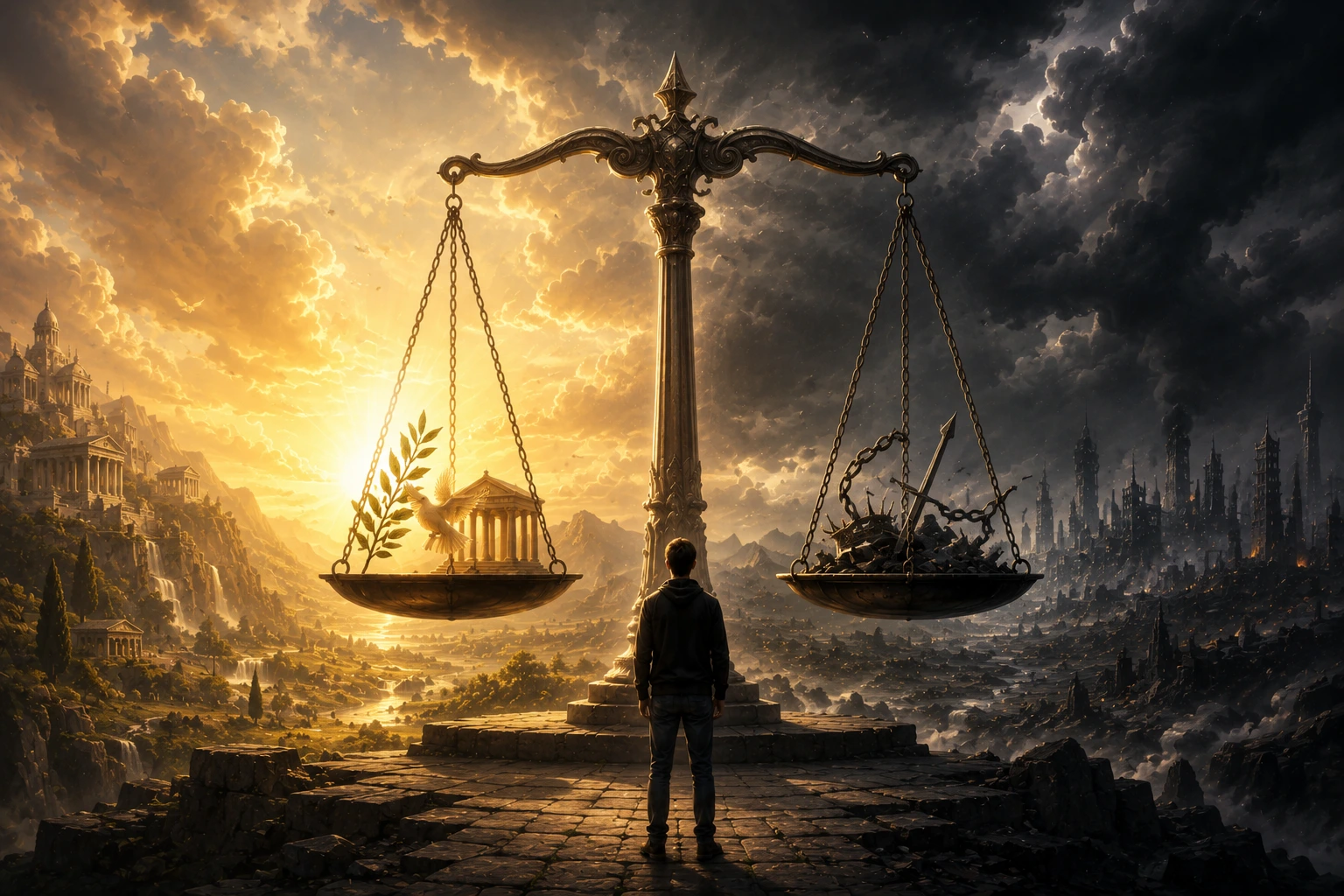
Every day, people make hundreds of decisions.
Most of them seem ordinary.
Should you tell the truth or stay silent?
Help a stranger or walk away?
Protect yourself or sacrifice your own interests for someone else?
Whether we realize it or not, nearly every one of these decisions rests on an invisible foundation—a belief about what is right and what is wrong.
That foundation is called morality.
But what is morality?
Does objective good and evil actually exist?
Or are moral values simply inventions created by human societies?
Why do different cultures disagree about many moral questions while still sharing surprisingly similar ideas about justice, compassion, and responsibility?
Can morality exist without religion?
Can artificial intelligence ever make genuinely moral decisions?
These questions have fascinated humanity for more than two thousand years.
They shaped the philosophies of Socrates, Plato, Aristotle, Immanuel Kant, Friedrich Nietzsche, and countless other thinkers.
Today, psychology, evolutionary biology, neuroscience, and artificial intelligence research have joined the conversation, offering new perspectives while leaving the deepest philosophical questions unresolved.
In this guide, we will explore the history of moral philosophy, compare the world’s most influential ethical theories, examine what modern science tells us about morality, and address one of the greatest questions ever asked:
Does objective good and evil exist, or is morality something humanity creates for itself?
Quick Answer
- Morality is a system of principles used to distinguish right from wrong.
- Ethics is the philosophical discipline that studies morality.
- Philosophers continue to debate whether objective moral truths exist.
- Evolutionary biology suggests empathy and cooperation provided survival advantages.
- Psychology explains how moral reasoning develops throughout life.
- Neuroscience investigates how the brain participates in moral judgment.
- Questions about morality are deeply connected to human nature, consciousness, free will, identity, and the meaning of life.
Why Morality Matters
Morality is not merely a philosophical abstraction.
It shapes every human civilization.
Laws depend on moral assumptions.
Education transmits moral values alongside knowledge.
Families teach children what they believe is right.
Politics, economics, medicine, science, and human rights all rely on moral judgments.
Without shared moral principles, trust, cooperation, justice, and peaceful societies would be nearly impossible.
That is why understanding morality ultimately means understanding humanity itself. It naturally extends the discussion begun in What Is Human Nature?, because our beliefs about human nature fundamentally shape what we consider good, evil, justice, responsibility, and virtue.
What Is Morality?
At its broadest level, morality is a system of principles, values, and standards that helps people distinguish right from wrong and guides how they ought to treat themselves and others.
Whenever we ask questions such as:
- Is this action right?
- Is this fair?
- Should I help someone?
- Do I have a responsibility here?
- What is the right thing to do?
we are making moral judgments.
Unlike laws, morality is not always written into legal systems.
A person can obey every law and still behave immorally.
History provides countless examples of legal systems that defended slavery, discrimination, or persecution.
Likewise, people have often broken unjust laws while acting according to deeply held moral principles.
This is why morality is often viewed as more fundamental than law itself.
Laws describe what societies permit.
Morality asks what people ought to do.
Morality is humanity’s ongoing attempt to answer one timeless question: How should we live together?
Morality vs. Ethics: What Is the Difference?
The terms morality and ethics are often used interchangeably, but philosophy distinguishes between them.
Morality refers to the values, beliefs, and behavioral standards that people actually follow.
Ethics is the branch of philosophy that studies morality.
Ethics asks deeper questions.
- Why is something considered right?
- Can morality be objectively true?
- Should moral rules ever change?
- Are moral values universal or culturally dependent?
- How should people act in difficult moral dilemmas?
In other words, morality is the subject, while ethics is the discipline that investigates it.
| Morality | Ethics |
|---|---|
| A system of values and behavioral principles. | The philosophical study of morality. |
| Answers: “What is right?” | Answers: “Why is it right?” |
| Develops through culture, experience, and tradition. | Examines the origin, logic, and justification of moral principles. |
Does Objective Good and Evil Exist?
This is the central question of moral philosophy.
Are some actions truly right or wrong regardless of what anyone believes?
Or are moral judgments simply products of culture, history, and personal opinion?
Two major philosophical traditions offer very different answers.
Moral Realism
Moral realism argues that objective moral facts exist independently of human beliefs.
According to this view, actions such as torture, genocide, or slavery remain morally wrong even if an entire society approves of them.
Human beings do not invent morality.
They gradually discover moral truths, much as scientists discover the laws of nature.
Moral Relativism
Moral relativism takes the opposite position.
It argues that moral values are shaped by culture, historical circumstances, traditions, and social norms.
Practices considered moral in one society may be viewed as unacceptable in another.
From this perspective, there are no universal moral standards that apply equally everywhere.
The debate between realism and relativism has continued for more than two thousand years.
Understanding it is essential because nearly every major ethical theory—from Socrates and Aristotle to Kant, utilitarianism, and modern neuroscience—attempts to answer this same question in different ways.
To understand those answers, we must begin where Western moral philosophy itself began: in ancient Greece.
Ancient Greece: Where Moral Philosophy Began
Long before psychology, neuroscience, or evolutionary biology existed, ancient Greek philosophers began asking questions that continue to shape moral philosophy today.
Rather than explaining right and wrong through mythology alone, they argued that morality could be examined through reason.
This shift transformed ethics from a collection of traditions into a philosophical discipline.
Many of the debates we still have today—about justice, virtue, responsibility, and human flourishing—can be traced back to these early thinkers.
Socrates: Morality Begins with Self-Knowledge
Socrates believed that people do not willingly choose evil.
Instead, they make immoral decisions because they misunderstand what is truly good.
For Socrates, ignorance—not malice—was the greatest source of wrongdoing.
“Know yourself.”
This famous principle summarized his philosophy.
Only by honestly examining our beliefs, motives, and actions can we become genuinely moral individuals.
Knowledge and virtue were inseparable.
According to Socrates, a person who truly understands goodness will naturally strive to act accordingly.
Plato: The Idea of the Good
Plato expanded his teacher’s ideas by arguing that goodness exists independently of human opinion.
Within his Theory of Forms, he described the Form of the Good as the highest reality.
Truth, justice, beauty, and morality all ultimately derive from this perfect and eternal source.
According to Plato, people do not invent morality.
They gradually discover it through reason, education, and philosophical inquiry.
This concept became one of the strongest historical arguments for objective morality.
Aristotle: Virtue Is Built Through Practice
Aristotle approached morality differently.
Rather than asking what goodness is, he asked how people become good.
His answer was remarkably practical.
Virtue is not something we are born with.
It is developed through repeated action.
People become honest by telling the truth.
They become courageous by acting courageously.
They become generous by practicing generosity.
Character is formed one decision at a time.
The Golden Mean
Aristotle argued that virtue usually lies between two harmful extremes.
| Deficiency | Virtue | Excess |
|---|---|---|
| Cowardice | Courage | Recklessness |
| Stinginess | Generosity | Wastefulness |
| Self-neglect | Self-respect | Vanity |
| Indifference | Kindness | People-pleasing |
For Aristotle, morality was not about rigid rules.
It was about developing practical wisdom—the ability to find the right balance in complex situations.
Why Ancient Ethics Still Matters
More than two thousand years later, the questions raised by Socrates, Plato, and Aristotle remain remarkably relevant.
Can morality be taught?
Does objective goodness exist?
Can character be strengthened through repeated choices?
Modern psychology, neuroscience, and behavioral science continue to investigate these very questions.
Yet the next major transformation in moral philosophy would come centuries later, when Immanuel Kant proposed a radically different answer—one centered not on virtue, but on duty itself.
Immanuel Kant: Morality Begins with Duty
In the eighteenth century, German philosopher Immanuel Kant proposed one of the most influential ethical theories in history.
He asked a deceptively simple question:
Why should people do the right thing even when it brings them no personal benefit?
Unlike Aristotle, who emphasized the development of virtuous character, Kant argued that morality should not depend on emotions, habits, or consequences.
A moral action is not defined by whether it makes us happy or produces desirable results.
Instead, it is defined by whether it is performed because it is the right thing to do.
For Kant, genuine morality begins with duty.
The Categorical Imperative
Kant’s most famous idea is known as the Categorical Imperative.
One of its best-known formulations is:
“Act only according to the principle that you could rationally wish everyone else to follow.”
Before making any decision, Kant believed we should ask:
What would happen if everyone acted this way?
If universal adoption of the rule would undermine trust, justice, or society itself, then the action cannot be morally justified.
Consider lying for personal advantage.
If everyone lied whenever it benefited them, trust would disappear, promises would lose their meaning, and communication itself would become unreliable.
For this reason, Kant argued that lying can never become a universal moral law.
Another famous version of the Categorical Imperative states:
“Treat every person always as an end in themselves, never merely as a means.”
This principle has profoundly influenced modern ideas about human dignity, equality, human rights, and justice.
Utilitarianism: Judging Actions by Their Consequences
While Kant focused on duty, another influential philosophical tradition reached a very different conclusion.
Utilitarianism, developed primarily by Jeremy Bentham and later expanded by John Stuart Mill, argues that morality depends on outcomes rather than intentions.
The central principle of utilitarianism is straightforward:
The morally right action is the one that creates the greatest overall good for the greatest number of people.
Under this view, difficult moral choices should be evaluated by comparing their likely consequences.
Utilitarian thinking continues to influence:
- public policy,
- healthcare ethics,
- economic decision-making,
- environmental policy,
- artificial intelligence safety,
- and medical resource allocation.
However, critics argue that utilitarianism raises difficult questions.
Can harming one innocent person ever be justified if it benefits thousands of others?
Should individual rights ever be sacrificed for the greater good?
These dilemmas remain some of the most challenging problems in contemporary ethics.
Friedrich Nietzsche: Did Humanity Invent Morality?
In the nineteenth century, Friedrich Nietzsche challenged many assumptions that Western civilization had accepted for centuries.
Rather than asking what is good, Nietzsche asked a more unsettling question:
Who created our moral values—and whose interests do they serve?
Nietzsche argued that moral systems are not timeless truths but historical creations shaped by power, culture, and social struggle.
He criticized moral traditions that, in his view, discouraged creativity, excellence, independence, and human flourishing.
Instead of unquestioningly accepting inherited values, Nietzsche believed individuals should critically examine them and take responsibility for creating authentic values of their own.
Although highly controversial, Nietzsche’s ideas profoundly influenced existentialism, psychology, literature, and modern philosophy.
Why These Ethical Theories Still Matter
Today’s ethical debates—about artificial intelligence, genetic engineering, autonomous weapons, climate responsibility, privacy, healthcare, and human rights—continue to draw upon these philosophical traditions.
Should morality be based on universal principles?
Should consequences matter most?
Can individuals redefine morality for themselves?
To explore these questions further, we must move beyond philosophy alone. Modern psychology, evolutionary biology, and neuroscience offer valuable insights into how morality may have developed—and how the human mind makes moral decisions today.
Evolutionary Biology: Where Did Morality Come From?
For centuries, morality was viewed primarily as a philosophical or religious concept.
Following Charles Darwin’s theory of evolution, however, scientists began asking a different question:
Could morality have evolved naturally?
At first glance, the idea seems contradictory.
If evolution rewards survival and competition, why would humans help strangers?
Why would people risk their own lives to save others?
Why do we experience empathy for people we have never met?
Modern evolutionary biology suggests that cooperation itself became one of humanity’s greatest survival advantages.
Why Cooperation Helped Humans Survive
Evolution is often summarized as “survival of the fittest,” but this phrase can be misleading.
Human beings did not become one of the planet’s most successful species simply because individuals were stronger than other animals.
They succeeded because they learned to cooperate on an extraordinary scale.
Early humans:
- hunted together,
- shared food,
- protected children collectively,
- cared for injured members of their communities,
- passed knowledge from one generation to the next.
Groups built on trust and cooperation often outperformed groups driven solely by selfish competition.
From this perspective, empathy, fairness, reciprocity, and compassion were not evolutionary accidents.
They became powerful adaptations that strengthened entire communities.
Then Why Does Evil Exist?
Evolutionary theory explains not only cooperation but also aggression.
Competition for food, territory, social status, and reproductive opportunities also shaped human behavior.
As a result, human nature appears to contain two competing tendencies.
- the capacity for compassion and cooperation,
- the capacity for aggression and self-interest.
Morality may therefore be understood as one of civilization’s most important tools for strengthening cooperation while limiting destructive forms of competition.
Rather than eliminating human instincts, moral systems help channel them toward peaceful coexistence.
Psychology: How Moral Thinking Develops
If biology helps explain where morality came from, psychology explores how individuals develop moral reasoning throughout life.
Children are not born with complete moral systems.
Instead, moral understanding gradually develops through interactions with:
- parents and caregivers,
- education,
- culture,
- friendships,
- personal experience,
- reflection and learning.
At the same time, research suggests that even very young children display early forms of empathy and fairness.
This indicates that morality is influenced by both innate human tendencies and lifelong learning.
Lawrence Kohlberg’s Stages of Moral Development
One of the most influential psychological models of morality was developed by Lawrence Kohlberg.
He proposed that moral reasoning develops through progressively more sophisticated stages.
| Stage | Primary Question |
|---|---|
| Pre-conventional | Will I be punished? |
| Conventional | What do society and authority expect? |
| Post-conventional | Which universal principles create justice? |
According to Kohlberg, moral maturity is reached when individuals are capable of evaluating rules critically rather than following them blindly.
History provides many examples of people who challenged unjust laws because they believed higher moral principles demanded it.
Why Do Good People Sometimes Do Bad Things?
One of psychology’s most difficult questions is not why evil people commit harmful acts, but why ordinary, decent people sometimes make deeply immoral choices.
Research shows that moral decision-making can be influenced by:
- fear,
- obedience to authority,
- group pressure,
- stress,
- fatigue,
- limited information,
- time pressure.
These findings suggest that morality is not a permanent personality trait.
It requires continual awareness, self-reflection, and the willingness to question our own decisions.
Modern neuroscience goes one step further by asking what actually happens inside the brain when people make moral judgments.
Neuroscience: How Does the Brain Make Moral Decisions?
For much of history, morality was considered the exclusive domain of philosophy and religion.
Today, neuroscience allows researchers to observe which areas of the brain become active while people make moral judgments.
Using modern brain-imaging technologies, scientists study what happens when people:
- decide whether to tell the truth,
- judge fairness,
- experience guilt,
- feel compassion,
- choose between personal benefit and helping others.
These studies reveal that morality is not controlled by a single “moral center” in the brain.
Instead, moral judgment emerges from the interaction of multiple systems responsible for:
- emotion,
- empathy,
- logical reasoning,
- self-control,
- predicting future consequences,
- social understanding.
This explains why moral decisions often involve both rational analysis and emotional intuition.
Rather than competing with each other, emotion and reason usually work together during ethical decision-making.
Can Morality Be Measured Scientifically?
Neuroscience has dramatically expanded our understanding of how people make moral decisions.
Yet most researchers agree that science cannot fully answer one crucial philosophical question:
Why should one action be considered morally right while another is morally wrong?
Brain scans can reveal how people evaluate moral situations.
They cannot determine which moral principles humanity ought to follow.
Science describes mechanisms.
Philosophy explores meaning.
Together, they provide a richer understanding of morality than either discipline could achieve alone.
Can Artificial Intelligence Be Moral?
As artificial intelligence becomes increasingly capable, ethical questions become more urgent.
Self-driving cars.
Medical diagnostic systems.
Military technologies.
Autonomous decision-making algorithms.
All of these systems may influence human lives.
But does making ethical calculations mean that a machine is moral?
Most philosophers argue that the answer is no.
An AI system can follow ethical rules.
It can predict consequences.
It can optimize outcomes.
It can even simulate empathy.
However, there is currently no evidence that artificial intelligence possesses:
- subjective experience,
- conscious awareness,
- genuine empathy,
- personal responsibility,
- a sense of guilt,
- moral accountability.
This distinction is essential.
Following ethical rules is not necessarily the same as understanding why those rules matter.
Many philosophers therefore argue that morality requires not only intelligence but also consciousness and responsibility.
If you would like to explore this question in greater depth, see Can Consciousness Be Uploaded into a Computer?, which examines whether a digital copy of a human mind could ever become the same conscious person.
Can Morality Exist Without Religion?
This remains one of the oldest and most debated questions in philosophy.
Some traditions argue that moral laws ultimately originate from God.
Others maintain that morality can be grounded in reason, empathy, human dignity, and our shared need to live together peacefully.
Although these perspectives differ regarding the source of morality, they frequently arrive at remarkably similar conclusions.
- Respect human dignity.
- Avoid causing unnecessary harm.
- Tell the truth.
- Help those in need.
- Accept responsibility for your actions.
This convergence suggests that at least some moral principles may be universal, even if people explain their origins in different ways.
Why Moral Dilemmas Have No Easy Answers
Real-life moral decisions are rarely simple.
Is it ever acceptable to lie in order to save a life?
Can sacrificing one person ever be justified to save many others?
Should unjust laws always be obeyed?
These situations are known as moral dilemmas.
They remind us that morality is far more than following a fixed list of rules.
It demands wisdom, compassion, critical thinking, and the courage to accept responsibility for difficult choices.
Ultimately, every moral dilemma leads back to one timeless question:
What does it truly mean to be a good human being?
The answer lies not in a single philosophy, religion, or scientific theory, but in humanity’s continuing effort to understand itself.
Comparing the Major Ethical Theories
Throughout history, philosophers have proposed different answers to one fundamental question:
What makes an action morally right?
Each theory captures an important part of morality, yet none fully explains every moral situation. Together, however, they provide a comprehensive framework for understanding ethical decision-making.
| Theory | Core Idea | Primary Strength | Central Question |
|---|---|---|---|
| Socrates | Virtue comes from knowledge. | Emphasizes self-examination. | Can understanding goodness make us good? |
| Plato | Goodness exists independently of human opinion. | Supports objective morality. | Can universal moral truth exist? |
| Aristotle | Character is formed through virtuous habits. | Focuses on personal development. | How does a person become virtuous? |
| Kant | Duty determines morality. | Provides universal moral rules. | Could everyone act according to this principle? |
| Utilitarianism | Consequences determine morality. | Maximizes overall well-being. | Which choice produces the greatest good? |
| Nietzsche | Values are historically created. | Questions inherited moral assumptions. | Who defines morality? |
| Evolutionary Biology | Morality evolved through cooperation. | Explains the biological roots of ethics. | Why did cooperation improve survival? |
| Psychology | Moral reasoning develops over time. | Explains how ethical thinking matures. | How do people learn morality? |
| Neuroscience | Moral judgments emerge from brain processes. | Explores the mechanisms of moral decision-making. | How does the brain evaluate right and wrong? |
A Brief History of Moral Thought
| Historical Period | Primary Question | Dominant View |
|---|---|---|
| Ancient Greece | What is the good life? | Morality is connected to wisdom and virtue. |
| Middle Ages | Does morality come from God? | Goodness reflects divine order. |
| The Enlightenment | Can morality be justified through reason? | Universal moral principles become central. |
| 19th Century | Should consequences define morality? | Utilitarianism and critiques of traditional morality emerge. |
| 20th Century | How does moral reasoning develop? | Psychology studies ethical development. |
| Modern Neuroscience | How does the brain make moral judgments? | Ethics is investigated through cognitive science. |
| The AI Era | Can machines become moral? | Ethics expands beyond human behavior. |
Conclusion
Morality has never been merely a collection of rules.
It has shaped civilizations, inspired legal systems, influenced religions, guided scientific progress, and determined how human beings treat one another.
Across thousands of years, philosophers have disagreed about whether morality is discovered or created, objective or relative, rational or emotional.
Yet despite these differences, they all sought to answer the same enduring question:
How should a human being live?
Modern science adds valuable insights into how morality evolved, how the brain processes ethical decisions, and why people sometimes fail to live according to their own values.
But science alone cannot determine what humanity ought to become.
That responsibility ultimately belongs to each individual.
Every honest conversation.
Every act of compassion.
Every difficult decision made with integrity.
Together, these choices shape not only our own character but also the moral fabric of society itself.
Morality is not simply knowing the difference between good and evil. It is choosing, day after day, to turn that knowledge into action.
Perhaps this is why morality remains one of philosophy’s greatest questions. In seeking to understand what is right, we ultimately seek to understand what it means to be fully human.
Frequently Asked Questions About Morality
1. What is morality?
Morality is a system of principles and values that helps people distinguish right from wrong and guides ethical behavior toward others and society.
2. What is the difference between morality and ethics?
Morality refers to the values and standards people follow in everyday life, while ethics is the branch of philosophy that studies and evaluates those moral principles.
3. Does objective good and evil exist?
Philosophers continue to debate this question. Moral realism argues that objective moral truths exist independently of human opinion, while moral relativism maintains that morality depends on culture and historical context.
4. What is moral realism?
Moral realism is the philosophical position that certain actions are objectively right or wrong regardless of individual beliefs or cultural traditions.
5. What is moral relativism?
Moral relativism argues that moral values are shaped by cultures and societies rather than existing as universal truths.
6. What did Aristotle believe about morality?
Aristotle believed that morality is developed through practice. Virtuous people become virtuous by repeatedly performing good actions until they become habits.
7. What is Kant’s Categorical Imperative?
It is the principle that people should act only according to rules they would be willing for everyone else to follow universally.
8. What is utilitarianism?
Utilitarianism judges actions by their consequences and argues that the morally best action produces the greatest good for the greatest number of people.
9. Why do good people sometimes do bad things?
Psychological research shows that fear, authority, stress, fatigue, group pressure, and limited information can all influence moral decision-making.
10. Is morality innate or learned?
Most researchers believe morality results from both biology and learning. Humans appear to possess innate tendencies toward empathy while developing more complex moral reasoning through experience.
11. Why is morality important?
Morality makes trust, cooperation, justice, and peaceful societies possible by providing shared standards for human behavior.
12. Can morality exist without religion?
Many philosophers argue that morality can be grounded in reason, empathy, and human dignity even without religious beliefs, while others believe morality ultimately depends on divine authority.
13. What role does the brain play in morality?
Neuroscience shows that moral judgment involves multiple brain systems responsible for emotion, empathy, reasoning, self-control, and social understanding.
14. Can artificial intelligence become moral?
Current AI systems can follow ethical rules and evaluate outcomes, but they do not possess consciousness, personal responsibility, or genuine moral awareness.
15. Does morality change over time?
Many moral norms evolve with societies, although certain principles such as fairness, honesty, and respect for human dignity appear across many cultures.
16. What is a moral dilemma?
A moral dilemma is a situation in which every available choice involves competing ethical values, making the decision especially difficult.
17. Is morality universal?
While specific moral customs vary between cultures, many societies independently developed similar principles regarding fairness, honesty, compassion, and cooperation.
18. Why is morality connected to free will?
Moral responsibility assumes that individuals possess at least some capacity to choose between different courses of action.
19. Can people become more moral?
Yes. Self-reflection, education, empathy, experience, and consistent practice of virtuous behavior can strengthen moral character throughout life.
20. What is the main conclusion of modern moral philosophy?
Modern philosophy increasingly views morality as the product of biology, psychology, culture, rational reflection, and personal responsibility. Regardless of its origins, morality ultimately becomes real through the choices people make every day.
What to Read Next
Morality is deeply connected to many of philosophy’s biggest questions. Understanding right and wrong requires exploring human nature, consciousness, free will, personal identity, and the meaning of life. These guides provide the next steps in building a complete philosophical understanding of the human condition.
- Human Nature
Discover whether people are naturally good, evil, or shaped primarily by biology, culture, and personal choice. - What Makes Us Human?
Explore the qualities that distinguish human beings and make moral responsibility possible. - Free Will
Can people be morally responsible if their decisions are determined by biology or circumstance? - Consciousness
Examine one of philosophy’s greatest mysteries and its connection to moral awareness. - Personal Identity
If people constantly change, who is responsible for actions performed in the past? - Identity Through Time
Explore how memory and continuity shape responsibility and moral agency. - The Soul
Can morality exist without a soul, or can ethical values be explained through natural processes? - Consciousness Beyond the Brain
Investigate whether conscious experience depends entirely on the physical brain. - Uploading Consciousness
Would a digital copy of a human mind possess genuine identity and moral responsibility? - Why Am I Me?
Explore subjective experience, personal identity, and the mystery of the self. - The Meaning of Life
Discover how morality, purpose, freedom, and responsibility shape human existence. - Mystery
Understand why curiosity and the unknown continue to shape philosophy, science, and civilization.
Continue the Journey Through Philosophical Fiction
Some philosophical questions are best explored through stories rather than theories alone. The Eternity novel series examines morality, consciousness, freedom, identity, responsibility, and the future of civilization through an interconnected philosophical narrative where every major decision carries profound ethical consequences.
- Those Who Guard Eternity
The beginning of a philosophical journey into responsibility, civilization, and the nature of existence. - Those Who Destroy Eternity
When morality, power, and survival collide, every decision reshapes the future. - Those Who Shape Eternity
Explore how values, leadership, and responsibility determine the destiny of civilizations. - Those Who See Clearly
A philosophical exploration of truth, perception, wisdom, and moral clarity.
Together, these articles and novels form an interconnected philosophical knowledge system that explores consciousness, morality, human nature, free will, personal identity, reality, meaning, and the future of humanity. Each work expands the others, creating a comprehensive map of the questions that have defined philosophy for thousands of years.