Read Children of Time first if you want to discover how a spider civilization thinks. Read The Three-Body Problem first if you want to investigate a mystery alongside a scientist who has good reason to doubt his instruments. Adrian Tchaikovsky gives you the pleasure of understanding creatures that initially seem strange. Cixin Liu gives you the pleasure of being wrong about what you thought you understood.
If you have already finished Liu’s first novel, your choice is slightly different. Go straight to whether to continue with The Dark Forest or switch to Tchaikovsky. This comparison discusses the openings and leaves the discoveries and endings for you.
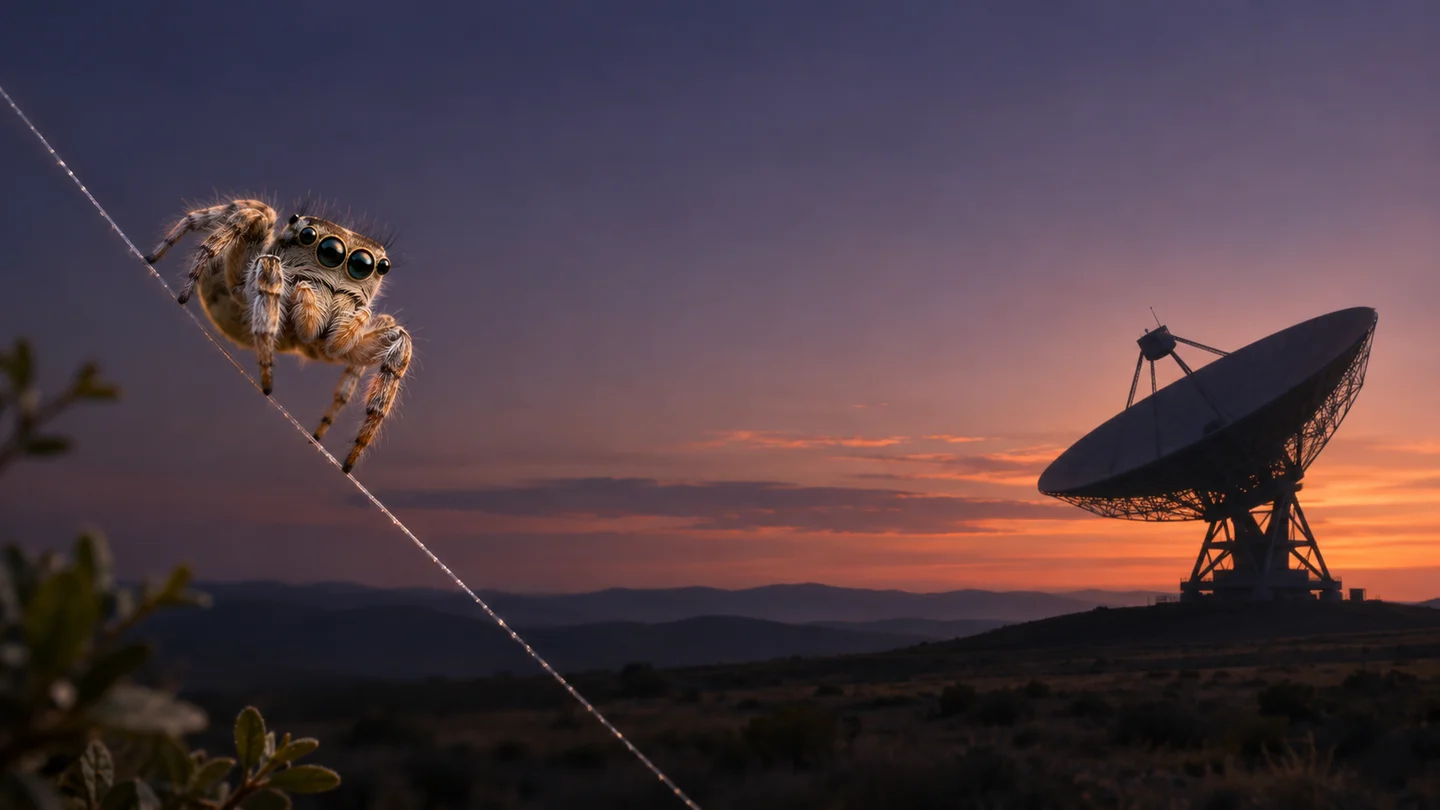
Children of Time and The Three-Body Problem at a glance
| Reader’s question | Children of Time | The Three-Body Problem |
|---|---|---|
| What hooks me? | A terraforming experiment gives an unintended species a future. | Scientific observations stop making sense. |
| Whom do I follow? | Human survivors aboard a ship and successive generations of spiders. | Human investigators and witnesses, particularly Wang Miao and Ye Wenjie. |
| What drives the science? | Evolution, perception, and the ways knowledge survives its makers. | Physics, astronomy, and the difficulty of reasoning from incomplete evidence. |
| What sets the pace? | Generational leaps alternate with episodes of shipboard urgency. | A present-day investigation draws together historical events and a puzzling game. |
| Can I stop after one? | A satisfying choice for a single-book commitment. | A complete mystery with a strong invitation to read book two. |
What do the first chapters feel like?
Children of Time opens with an experiment conceived on an extravagant scale. A scientist expects to watch intelligence develop on a world prepared for that purpose. Something goes wrong. One of Tchaikovsky’s best early decisions is to let you see the consequences from ground level. A creature on the planet has immediate problems of her own. Whether she can catch prey matters long before anyone would think to call her part of a civilization.
That shift gives you a good test of your appetite for the book. If you would happily spend another chapter with that creature to find out what she can do, keep reading. The human strand adds an entirely different pressure. People fleeing a ruined Earth need somewhere to live. You know enough about the planet to appreciate just how complicated that hope already is.
In Ken Liu’s English translation, The Three-Body Problem opens during China’s Cultural Revolution. Public violence against a physicist makes a lasting impression on his daughter, Ye Wenjie. Later, when the nanoscientist Wang Miao encounters phenomena that challenge his confidence in observation itself, you carry a question from those earlier pages: what would lead someone who understands science to lose faith in the people practicing it? Readers drawn to history as well as physics have a reason to start here.
Which book brings you closer to a nonhuman mind?
Children of Time is my pick for this. Consider something as ordinary as getting someone’s attention. You might call their name. A spider can set silk vibrating. Now imagine that your reader has learned to notice vibrations as attentively as dialogue. A thread can carry a warning, an invitation, or evidence that something dangerous is close. Tchaikovsky makes the spiders’ surroundings legible a little at a time, until you can anticipate what one of them might try.
The spiders’ history gains weight because you remember how small certain discoveries once were. When you meet a later generation, the interesting detail is often the thing an individual takes for granted. You saw an ancestor work for it. If you enjoy science fiction that makes an everyday human custom seem peculiar when viewed from another body, this is the richer of the two books for you.
Liu puts you in the more uncomfortable position of an observer. Wang has training, instruments, and other people to consult. Those advantages make his uncertainty more disturbing. A virtual world gives him room to test interpretations, and a reader can form a theory right alongside him. If your favorite moment in a mystery is the discovery that two apparently unrelated clues belong together, Liu offers more of that particular pleasure.
Which is easier to read, and where does each slow down?
For a first venture into hard science fiction, I’d start with Children of Time if you like natural history. Hunting, mating, building, and surviving give unfamiliar ideas a visible consequence. The adjustment comes with the time jumps. A name such as Portia recurs across generations. On returning to the spiders, orient yourself by asking what this generation has inherited and what problem it faces. Trying to follow Portia as one continuous biography makes the book harder than it needs to be.
Choose The Three-Body Problem if a detective story is your easier way into science. You can follow Wang’s problem without solving an equation. The more demanding passages ask you to hold several explanations in mind while the novel moves between periods, an investigation, and sessions inside a game. If a game sequence initially seems detached from the investigation, keep track of what the players are trying to predict. That question gives the episodes a thread you can follow.
For readers who struggle with spiders, one practical distinction matters. Tchaikovsky spends sustained time describing spider movement, hunting, and physical contact. The story gives those details emotional meaning, but they remain vividly present. If that prospect would keep you from picking the book up again tomorrow, start with Liu.
After The Three-Body Problem, should you read The Dark Forest or Children of Time?
Read The Dark Forest if you want to know what humanity does next. Read Children of Time if you finished Liu’s book wanting more time inside another civilization. The Dark Forest is the second novel in Liu’s sequence. Starting it while the first book is fresh lets you carry forward the stakes you already understand. This is the better choice if the most urgent question in your mind begins with “How can Earth…?”
Switch to Tchaikovsky if your curiosity points the other way. What might intelligence build with different senses, different limbs, and different instincts? The spider chapters begin answering that almost immediately. You can return to Liu later. If it was the unsettling scientific mystery that held you, the Cokos guide to books like The Three-Body Problem also compares alternatives by the part of Liu’s novel you want to experience again.
Which works better if you only want to read one book?
I’d choose Children of Time for a book club meeting just once. The opening gives the group two competing claims on one world, and the novel carries that tension far enough for readers to look back and ask when their sympathies changed. A useful discussion opener is surprisingly specific: at what point did you start thinking of the planet as the spiders’ home?
Choose The Three-Body Problem for a group that likes reconstructing a mystery together or expects to continue into a second volume. Its early historical scenes give you something to discuss even with a reader who skimmed the physics. Ask which did more to shape your understanding of first contact: the evidence Wang uncovered, or what you knew about Ye Wenjie before his investigation began?
For a solo reader still undecided, sample one chapter from each English edition. Pick Tchaikovsky if you find yourself wishing you could get back to the spiders. Pick Liu if you close the excerpt and immediately start constructing an explanation.